In the stable operation of HVAC systems, pressure sensors are core components that ensure equipment safety, improve energy efficiency, and optimize control. From residential air conditioning units to large commercial HVAC systems, pressure sensors provide critical data for equipment protection, fault prediction, and performance optimization by accurately monitoring air pressure, refrigerant pressure, and system differential pressure. This article offers a comprehensive reference for equipment engineers, procurement professionals, and maintenance personnel – covering the role, applications, installation points, common troubleshooting, and selection guidelines for pressure sensors in HVAC systems.
Pressure sensors are not "add‑on components" in HVAC systems – they play a critical role in safety protection, precise control, and energy efficiency optimization. Their core value is reflected in three dimensions:
Equipment safety protection – Real‑time monitoring of high/low refrigerant pressure triggers protection mechanisms when pressure exceeds safe thresholds, preventing compressor overload and pipe rupture. They also monitor duct differential pressure to prevent fan burn‑out caused by blocked air paths.
System energy efficiency optimization – Accurate air pressure and refrigerant pressure data enable variable frequency drive (VFD) control of fans and refrigerant flow regulation, avoiding overloading, significantly reducing energy consumption, and improving unit efficiency.
Early fault warning – Pressure abnormalities are often the first signs of HVAC system faults. Sensor data can pre‑emptively indicate filter clogging, pipe leakage, fan failure, etc., reducing unexpected downtime and lowering maintenance costs.
In different types of AC units, pressure sensor applications vary, but they all focus on safety, energy savings, and easier maintenance.
Monitor refrigerant – protect the compressor
Measure compressor suction and discharge pressure. If high pressure rises too high or low pressure drops too low, the system triggers protection to prevent compressor burn‑out. It also helps determine whether the system is under‑charged with refrigerant – no more guessing. Chillers and VRF systems can hardly run without them.
Use differential pressure to detect filter clogging
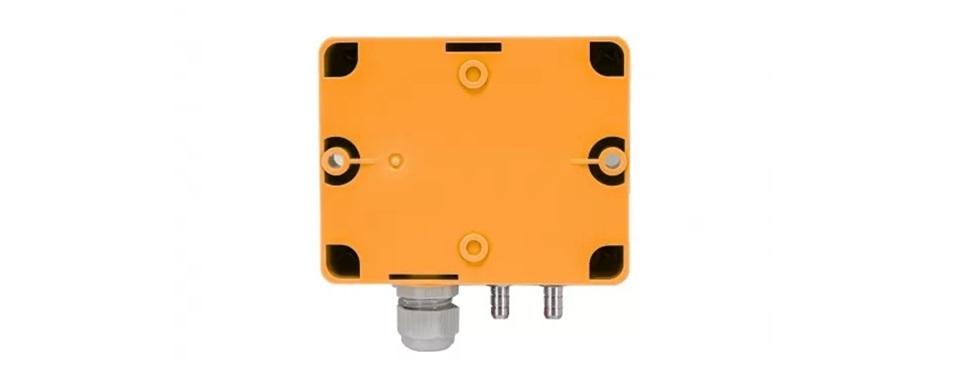
A differential pressure sensor monitors the pressure difference between supply and return air ducts. When the differential increases significantly, it means the filter is clogged and needs replacement. This ensures proper airflow, prevents indoor PM2.5 levels from rising, and avoids fan "starvation."
Monitor fan differential pressure – save energy and reduce noise
By measuring the pressure difference across the fan, you can tell whether it is operating properly. This enables soft starts and VFD speed control, allowing the fan to work on demand rather than always at full load – lowering both noise and electricity bills.
Static pressure control – solve uneven air distribution
In commercial systems, duct static pressure sensors monitor system resistance in real time and work with VFDs to adjust fan speed, ensuring that each terminal unit receives similar airflow. No more fighting over which diffuser gets air.
Proper installation directly affects measurement accuracy and sensor service life. Below are key installation points for HVAC applications:
Selecting the installation location
Refrigerant pressure sensors should be installed on straight pipe sections at the compressor discharge, suction, or condenser/evaporator inlet/outlet – away from elbows, valves, and turbulent flow zones. For duct differential pressure sensors, the high‑pressure port should be on the fan discharge side, and the low‑pressure port on the fan inlet side to ensure accurate differential signals.
Mounting orientation and sealing
When installing sensors for liquid or refrigerant media, pay attention to venting to avoid air pockets that affect measurement. Threaded connections require appropriate seals to prevent refrigerant leakage. Duct sensors must be properly sealed to prevent air leaks that distort differential pressure readings.
Environmental protection measures
Outdoor or high‑humidity installations require moisture and condensation protection. For hazardous areas (e.g., gas‑fired AC units), use explosion‑proof sensors that meet site safety codes. High‑temperature applications require high‑temperature models with adequate heat dissipation space.
Signal wiring
Sensor signal wires should be routed separately from power cables to avoid electromagnetic interference. Digital signal sensors require correct communication protocol matching. Analog signal sensors (e.g., 4–20 mA) need shielded cables for stable transmission.
Over long‑term use, pressure sensors may experience data drift, signal loss, or other issues. Common faults and troubleshooting methods include:
Data drift / inaccurate measurement
Often caused by improper installation location, media blockage, or zero drift. Solutions include cleaning the pressure port, recalibrating the zero point, and checking installation orientation. For aged sensors, inspect the diaphragm for wear or damage.
No signal output / abnormal output
First check power supply and wiring for open/short circuits. For analog sensors, verify load resistor matching. For digital sensors, check communication protocol and baud rate settings.
Frequent protection alarms
Could be due to sensor false alarms or actual system pressure abnormalities. Compare sensor readings with a gauge to determine if the sensor is faulty. If the sensor is working, check for system issues such as refrigerant leaks or blocked air ducts.
Short sensor service life
Usually caused by environmental factors – refrigerant corrosion, high temperatures, vibration, etc. Re‑evaluate sensor selection based on operating conditions, or add protective measures (e.g., buffer tubes, vibration‑damping mounts).
Selection should consider system operating conditions, accuracy requirements, and installation constraints. Pay attention to the following parameters:
Media type and compatibility
For refrigerant media, choose models resistant to refrigerant corrosion – avoid chemical reactions with the refrigerant. For air/gas media, select sensors resistant to clogging and dust, suitable for complex duct conditions.
Range and accuracy matching
Refrigerant high‑side typically requires a range of 0–4 MPa, low‑side 0–1 MPa. Duct differential pressure is usually low‑range – choose low‑range, high‑sensitivity differential pressure sensors (e.g., 0–500 Pa). An accuracy class of 0.5 or better is recommended.
Output signal type
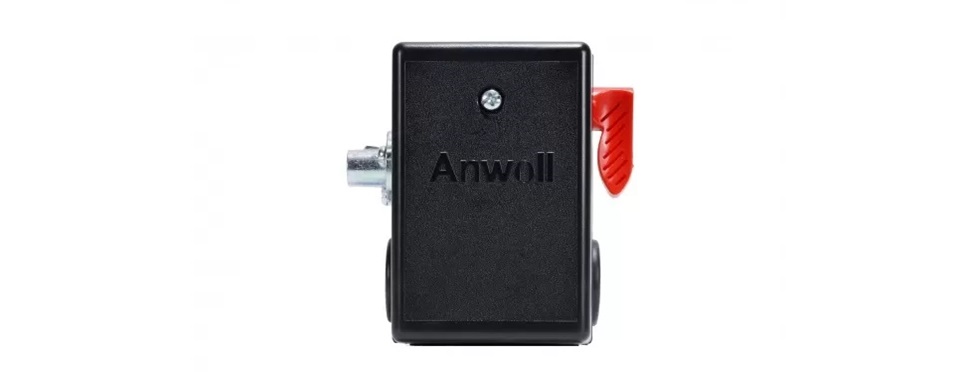
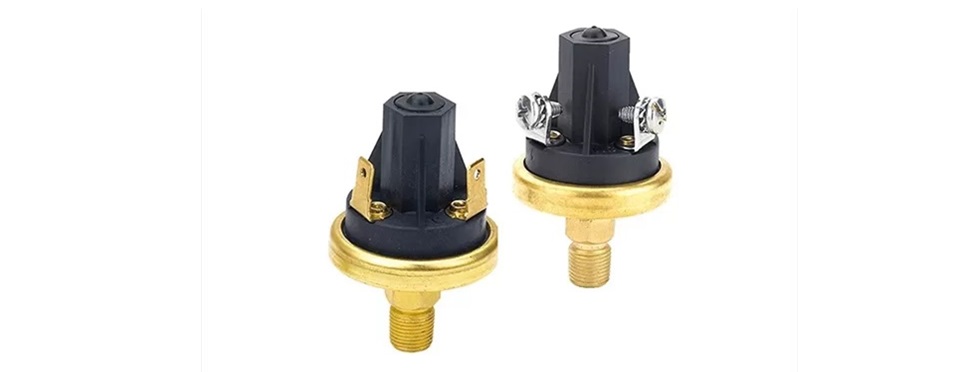
For simple units, a switching pressure switch can provide high/low pressure protection. For systems requiring continuous monitoring, choose a transmitter with 4–20 mA analog output or RS485 digital signal for easy integration with PLCs or unit controllers.
Environmental adaptability
High‑temperature environments (e.g., compressor discharge side) require high‑temperature models. Explosion‑proof applications require ATEX/IECEx certification. For high‑humidity or dusty environments, choose sensors with IP65 or higher protection rating.
Installation and maintenance convenience
Prefer modular designs that allow on‑site calibration for easier maintenance and replacement. Ensure thread sizes match unit piping to reduce leakage risks from adapters.
As a professional pressure control equipment manufacturer, we offer a full range of pressure sensors, differential pressure transmitters, and pressure switches specifically designed for HVAC systems – covering refrigerant pressure monitoring, duct differential pressure control, fan protection, and more. We support custom ranges, output signals, and special adaptations (explosion‑proof, high‑temperature, etc.), providing stable and reliable core components for HVAC equipment manufacturers.