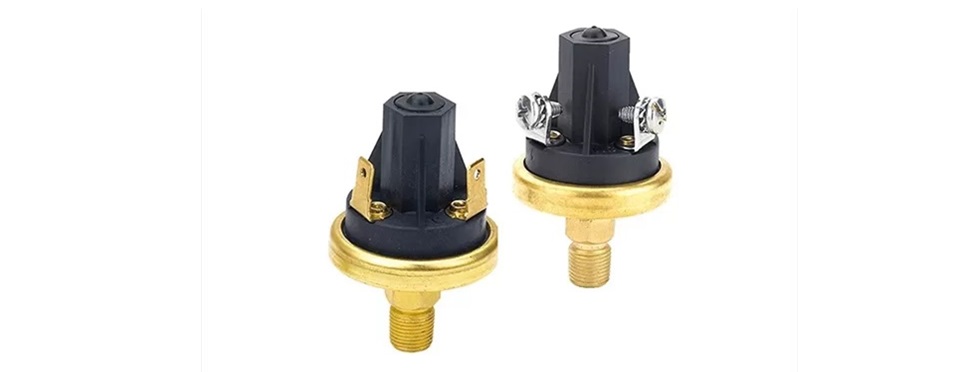
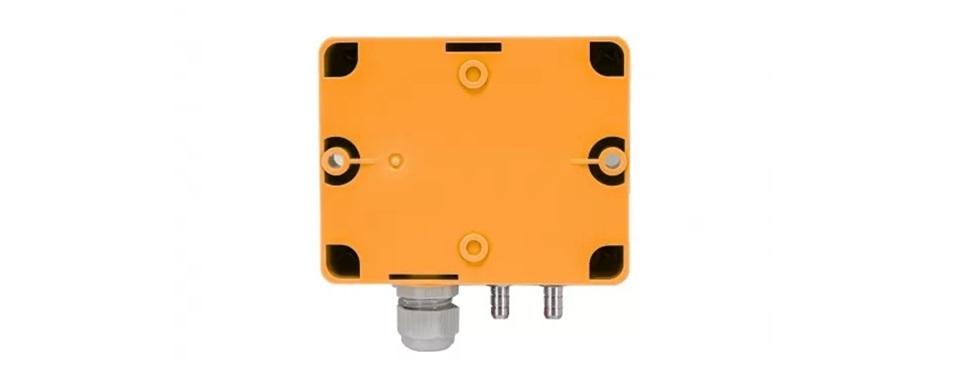
The differential pressure switch working principle is based on comparing pressure at two points and changing an electrical contact when the difference reaches a preset value. Unlike a conventional pressure switch that monitors one pressure reference, a differential model has a high-pressure port and a low-pressure port.
If P1 is the high-side pressure and P2 is the low-side pressure, the measured differential is ΔP = P1 − P2. This pressure difference acts on a diaphragm or similar sensing element. Once the force exceeds the calibrated spring setpoint, a microswitch changes state to start a fan, open a valve, trigger an alarm or stop equipment.
Understanding this mechanism helps engineers determine whether a differential switch is appropriate for HVAC, filtration, pumps, chilled-water systems and other threshold-based control applications.
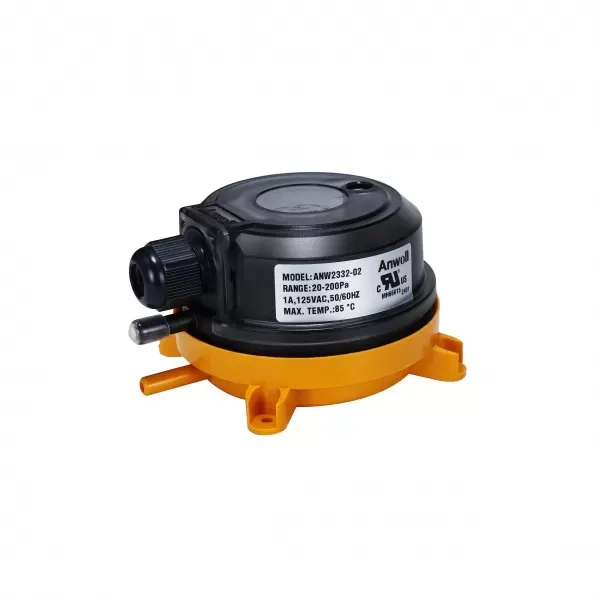
The differential pressure switch working principle converts the pressure difference between two sensing ports into mechanical movement that operates an electrical switch at a defined setpoint.
Pressure enters the high- and low-pressure connections on opposite sides of a diaphragm. Because the pressures are unequal, a net force acts on the sensing element. A calibrated spring resists this movement until the selected differential-pressure threshold is reached.
Pressure differences in low-pressure applications are commonly expressed in pascals. According to the NIST Guide to SI pressure units, 1 Pa equals 1 N/m², making the pascal particularly useful for small air-pressure differences.
The operating sequence is straightforward:
Pressure difference develops: P1 and P2 create a net force across the diaphragm.
The diaphragm moves: Movement increases as differential pressure approaches the setpoint.
The switch actuates: At the preset value, the mechanism operates a microswitch.
The switch resets: Differential pressure must fall below a separate reset value before the contacts return.
The difference between actuation and reset is called deadband or return differential. It prevents rapid on-off cycling around one exact pressure value.
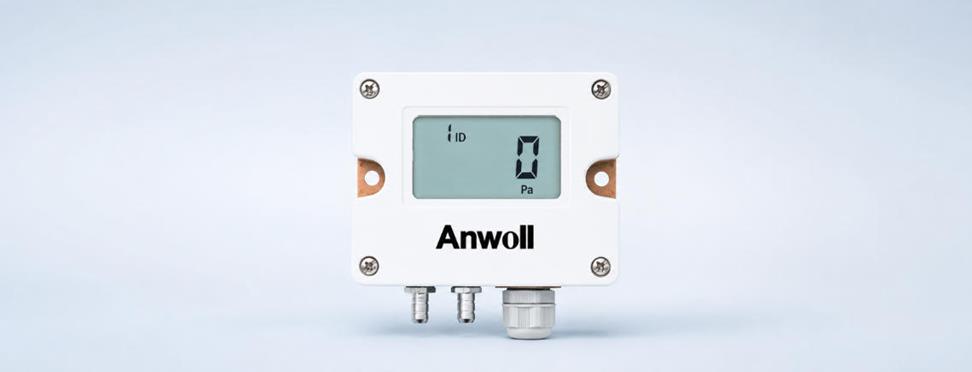
A practical example is Anwoll's differential pressure switch range. Its DPS52 micro model covers differential ranges from 20–200 Pa up to 1000–5000 Pa, depending on configuration, with SPDT switching. This illustrates the core function of differential pressure switch technology: converting a defined pressure difference into a simple electrical control action.
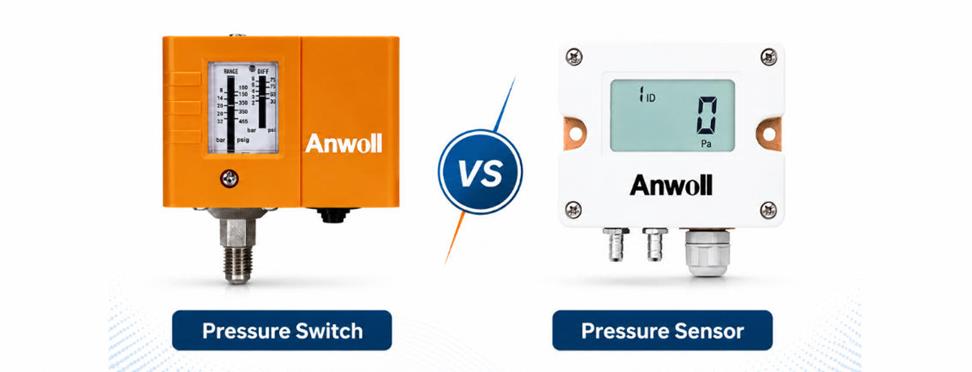
A differential pressure switch provides a discrete ON/OFF contact at a setpoint, while a differential pressure transmitter continuously converts differential pressure into a proportional electrical signal. Although both devices compare pressure at two points, they serve different control purposes.
| Feature | Differential Pressure Switch | Differential Pressure Transmitter |
|---|---|---|
| Main output | ON/OFF contact | Continuous signal |
| Typical signal | SPDT/relay contact | 4–20 mA, 0–10 V, RS485 |
| Main purpose | Alarm, interlock or control | Measurement and monitoring |
| Setpoint | Defined switching threshold | Software/controller threshold |
| Best suited for | Simple automatic action | Trending and BMS/process data |
If a filter only needs a warning contact when resistance becomes excessive, a differential switch can be sufficient. If operators need to see whether pressure is 120 Pa, 180 Pa or 240 Pa and track the trend, a transmitter is more appropriate. This is also why the differential pressure switch working principle remains useful in relatively simple control circuits: it can trigger an action directly without requiring continuous analog processing. For projects that involve several types of threshold controls rather than continuous sensing, Anwoll's broader pressure switch portfolio includes differential, adjustable, compressor and compact switch configurations.
Differential pressure switches are used wherever equipment needs an automatic response when the pressure difference between two locations becomes too high or too low.
One common application is air-filter monitoring. As a filter collects contamination, airflow resistance generally increases and the pressure difference across the filter rises. ASHRAE refers to resistance to airflow as pressure drop, making differential pressure a practical indicator for filter condition. The ASHRAE Standard 52.2 resources describe pressure-drop measurement as part of air-cleaner performance testing.
In HVAC systems, differential switches can also be used for fan proving, duct-pressure status and air-handling control. In water systems, they may monitor the difference between supply and return lines or initiate bypass-valve and pump-related control when differential pressure crosses a threshold.
Selection should start with the expected differential-pressure range and required switch setpoint. Engineers should then evaluate medium compatibility, deadband, maximum pressure, electrical contact rating, process connections, temperature and enclosure protection.
The electrical application matters as well. For appropriate equipment categories, IEC 60730-2-6 specifies requirements for automatic electrical pressure-sensing controls used in applications including heating, air-conditioning and building automation.
The correct switch should therefore be chosen according to both the pressure condition being detected and the electrical action required after the threshold is reached.
The differential pressure switch working principle is a threshold-control process in which pressure difference moves a sensing element against a calibrated spring until an electrical contact changes state. This simple mechanism makes the differential pressure switch useful for filters, fans, pumps, chilled-water loops and equipment protection. The key selection parameters are differential range, setpoint, deadband, medium, electrical load and operating environment. For engineers, understanding the function of differential pressure switch devices also makes it easier to decide when simple ON/OFF control is sufficient and when continuous differential-pressure measurement requires a transmitter instead.
It measures the difference between pressure at two separate sensing points.
Differential pressure moves a diaphragm or similar sensing element until a preset point actuates an electrical switch.
The setpoint is the pressure difference at which the electrical contact changes state.
Deadband is the difference between the actuation pressure and the pressure at which the switch resets.
Yes. It can detect when pressure drop across a filter reaches a predetermined threshold.
No. A switch provides discrete ON/OFF action, while a transmitter provides continuous measurement data.