Selecting a pressure sensor supplier involves more than comparing unit prices. Industrial buyers need stable accuracy, compatible materials, repeatable production, technical documentation and reliable delivery across multiple orders.
The best pressure sensor suppliers should be able to translate an application requirement—pressure range, medium, output, accuracy and environment—into a technically suitable product. For OEMs and system integrators, this is especially important because a sensor failure can affect an entire compressor, HVAC unit, pump or automation system.
When evaluating pressure sensor suppliers, buyers should therefore assess technical capability and supply consistency together rather than choosing from a catalogue based on price alone.
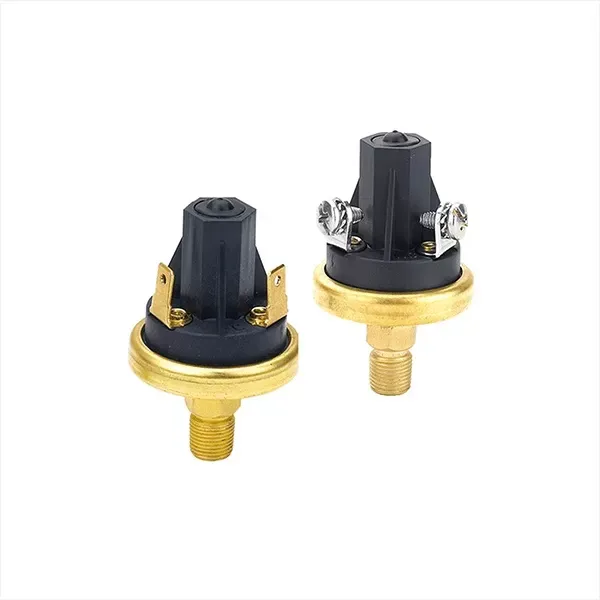
A qualified pressure sensor supplier should demonstrate application knowledge, measurable product specifications, consistent manufacturing and clear technical documentation.
Start with the supplier's product scope. A factory supplying industrial sensors should understand gauge, absolute and differential pressure, as well as common electrical outputs and media compatibility.
A practical supplier comparison can use the following framework:
| Evaluation Area | Strong Supplier | Warning Sign |
|---|---|---|
| Pressure range | Clearly defined ranges | “One sensor fits all” |
| Accuracy | Specified in %F.S. or equivalent | No test condition stated |
| Materials | Wetted materials documented | Material information unclear |
| Output | 4–20 mA, voltage or digital clearly defined | Output details incomplete |
| Calibration | Traceable test procedure | No calibration information |
| Documentation | Datasheet, drawings and test data | Marketing brochure only |
| Customization | Range, thread, connector options | No engineering support |
The evaluation should begin with the application. For example, a refrigeration sensor may need different media compatibility from a water-treatment transmitter, while low-pressure HVAC measurement requires a very different range from hydraulic equipment.
This is why experienced pressure sensor manufacturers usually ask about the medium, operating range, temperature and controller interface before recommending a model.
Pressure sensor specifications should be compared under equivalent test conditions because accuracy, overload capacity and environmental ratings can otherwise appear misleading.
Accuracy is one of the first parameters buyers notice, but it should not be reviewed alone. Repeatability, hysteresis, temperature effects and long-term stability also influence measurement quality.
For transmitters, the IEC 60770-1 performance evaluation standard provides standardized methods for evaluating industrial-process transmitters with electrical or pneumatic outputs.
Buyers should also verify:
measurement range and allowable overpressure;
total accuracy and test temperature;
operating and storage temperatures;
process connection and wetted materials;
4–20 mA, voltage or digital output requirements.
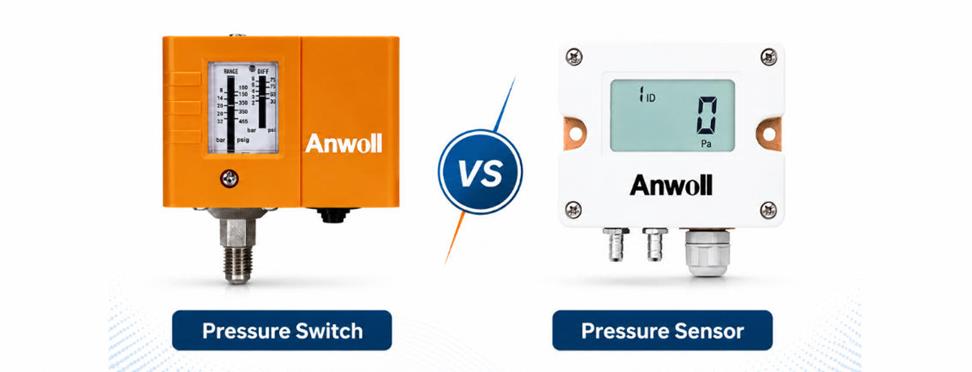
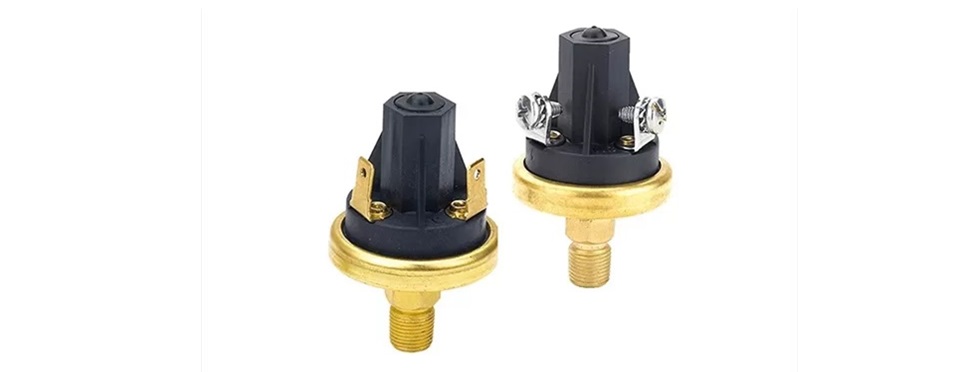
If continuous process measurement is required, a pressure transmitter may be more appropriate than a simple switching device.
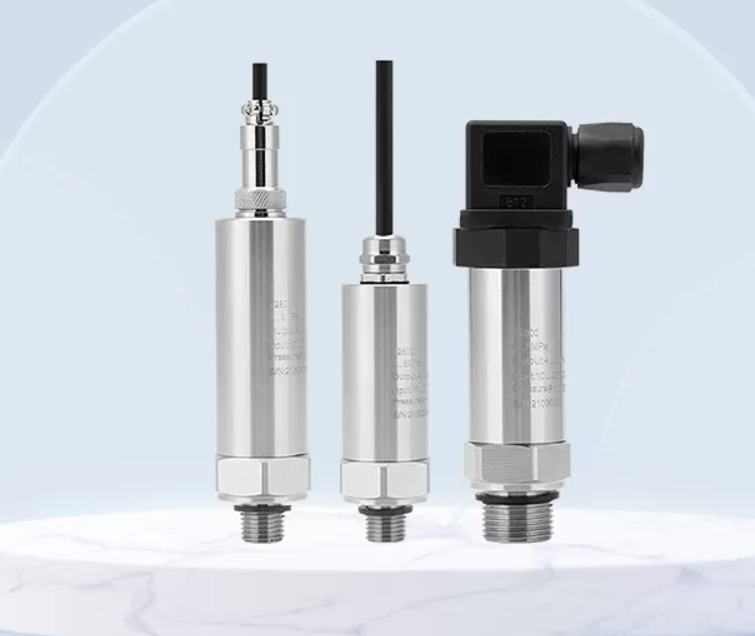
Published specifications illustrate why detailed comparison matters. ANWOLL's PT13, for example, lists pressure ranges extending to 60 MPa, accuracy options of ±0.25% F.S. or ±0.5% F.S., and overload capability of 1.5 times rated pressure, depending on configuration.
Numbers like these should be verified against the exact configuration being quoted rather than assumed for every product in a manufacturer's range.
A reliable pressure sensor company should control product quality from incoming materials through calibration, final inspection and batch traceability.
A quality-management certificate does not automatically guarantee that every sensor is suitable, but structured quality systems provide a useful supplier-screening reference. ISO 9001 quality management requirements cover process control, performance evaluation and continual improvement; ISO reports more than one million ISO 9001 certificates across 189 countries.
Environmental protection should also match the installation. An indoor controller does not need the same enclosure protection as a sensor exposed to dust, moisture or washdown conditions. The IEC 60529 IP Code standard defines enclosure protection classifications against access, solid objects and water.
Beyond certification, evaluate actual supply capability. Ask whether calibration results can be traced by batch, whether critical components are controlled between production lots and what happens when a quality issue occurs.
A supplier that can deliver an excellent sample but cannot reproduce it consistently in a 5,000-piece order creates a much larger risk than a small difference in purchase price.
Supplier qualification should confirm that the approved sample can be reproduced reliably at commercial scale and integrated into the customer's system without unnecessary modification.
Before approving a pressure sensor supplier, buyers should complete a representative sample test under realistic operating conditions. Check zero output, span, repeatability, connector fit, leakage and behavior at expected temperature and pressure limits.
Customization should also be clarified early. Common OEM requirements include pressure range, process thread, connector, cable length, output signal, housing and private labeling. Excessive customization can increase MOQ and lead time, so the engineering benefit should justify the change.
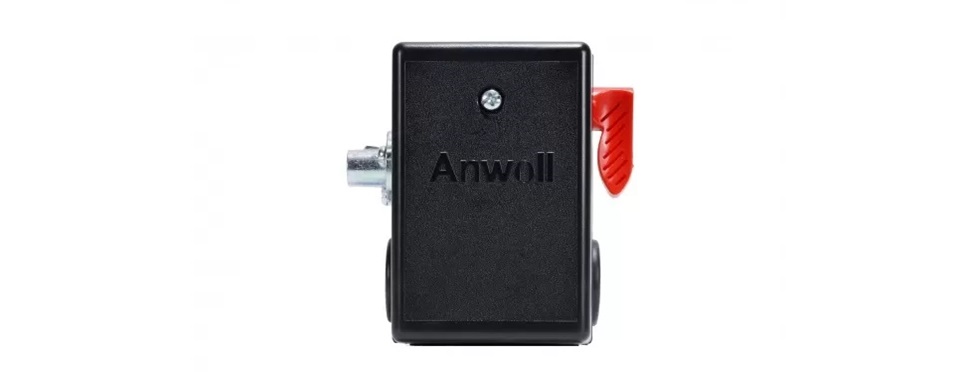
A useful example is ANWOLL, whose published pressure-control portfolio includes pressure transmitters and switches for multiple media and industrial applications. The relevant purchasing lesson is not the number of available models, but whether a supplier can document how a proposed configuration matches the customer's operating conditions.
Finally, compare total cost, not only sensor price. Calibration failures, inconsistent connectors, production delays or premature field replacements can cost far more than a modest difference in unit price.
Selecting pressure sensor suppliers is ultimately a technical qualification and supply-chain decision, not simply a purchasing comparison. Reliable pressure sensor manufacturers should provide clear specifications, repeatable test data, appropriate quality controls and practical engineering support. Buyers should verify accuracy, range, media compatibility, output, environmental protection and samples before approving mass production. A strong pressure sensor supplier is the one that can reproduce the agreed specification consistently throughout the life of the project.
Provide the medium, pressure range, temperature, accuracy requirement, output signal and annual quantity.
Not always, but a documented quality-management system can make supplier qualification and traceability easier.
Yes. Samples should be tested under conditions representative of the real application.
It depends on the application. Higher accuracy usually increases cost and is unnecessary if the process does not require it.
Many can customize range, output, connection, cable, connector or labeling, although MOQ and lead time may change.
Usually not. Compare consistency, calibration, documentation, support and total lifecycle cost together with purchase price.